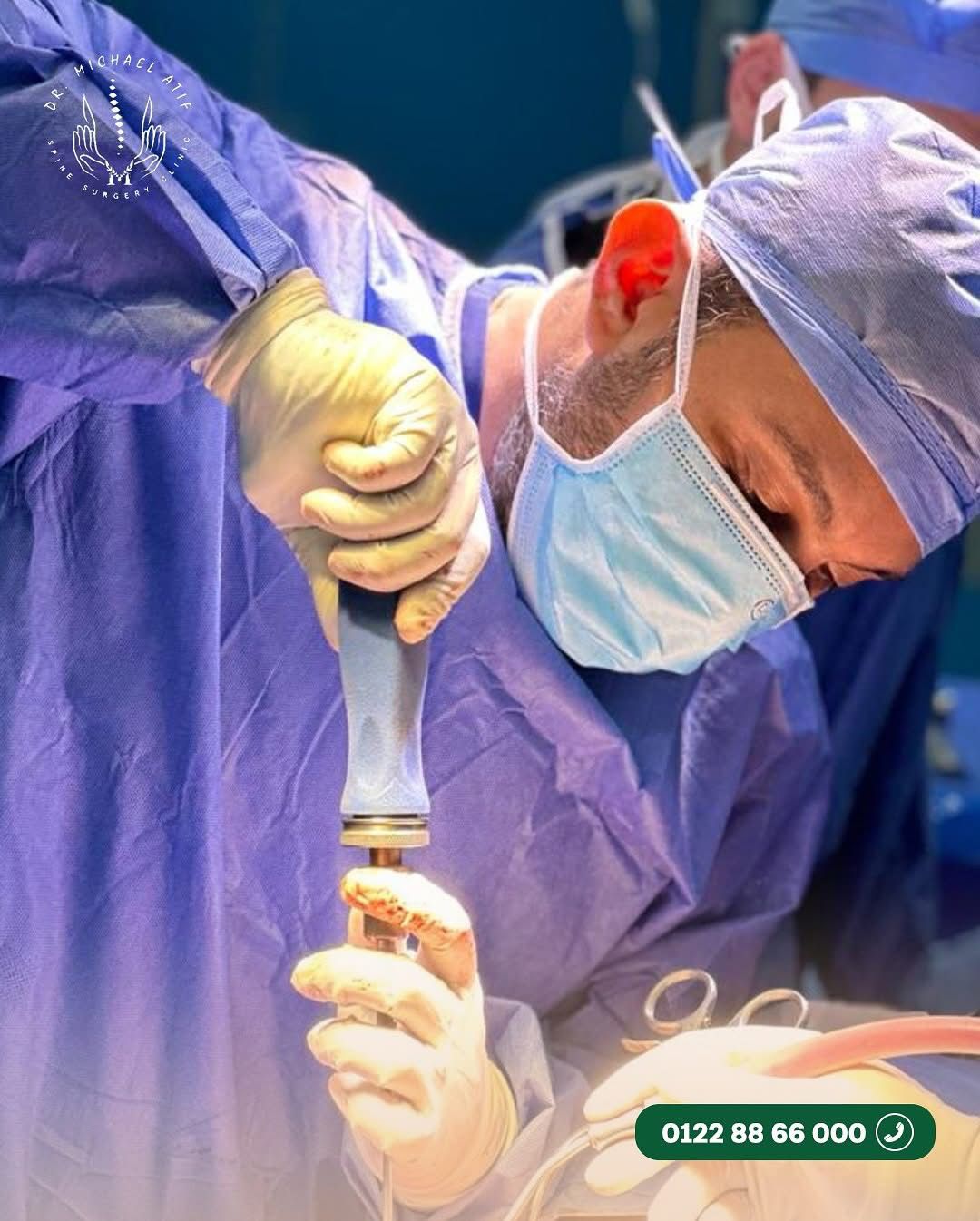
Lumbar Spine Fusion Surgeries
Lumbar spine fusion surgeries aim to stop painful motion of the affected vertebra by linking it to one or more vertebrae to relieve pain and prevent instability or nerve compression. This is usually done by placing screws and metal rods with the addition of a bone graft so that the vertebrae fuse over time.
When is Spine Fusion Needed?
- Spinal instability.
- Unstable fractures.
- Spondylolisthesis (vertebral slippage).
- Severe stenosis with spinal instability.
- Deformities such as Scoliosis.
- Certain spinal tumors or infections.
Types of Lumbar Fusion
Types vary according to the surgical approach:
1️⃣ Posterior Fusion
Most Common: Fixation is performed using screws from the back, placing a Cage between the vertebrae, and adding a bone graft between the vertebrae to be fused.
2️⃣ Anterior Lumbar Interbody Fusion (ALIF)
3️⃣ Lateral Interbody Fusion (OLIF/LLIF/XLIF)
Used in specific, less common cases.
- Pedicle screws.
- Metal Rods.
- Interbody Cages.
- Bone graft (autograft or synthetic).
Recovery Period
- Walking: Usually on the same day of surgery.
- Support: A brace may be used depending on the case.
- Activity: Gradual return to activity within weeks.
- Fusion: Complete bone fusion takes a few months.
Dr. Michael has extensive experience in performing fusion surgeries using various techniques, as well as revision surgeries for re-fixation or correcting previously unsuccessful spinal surgeries.