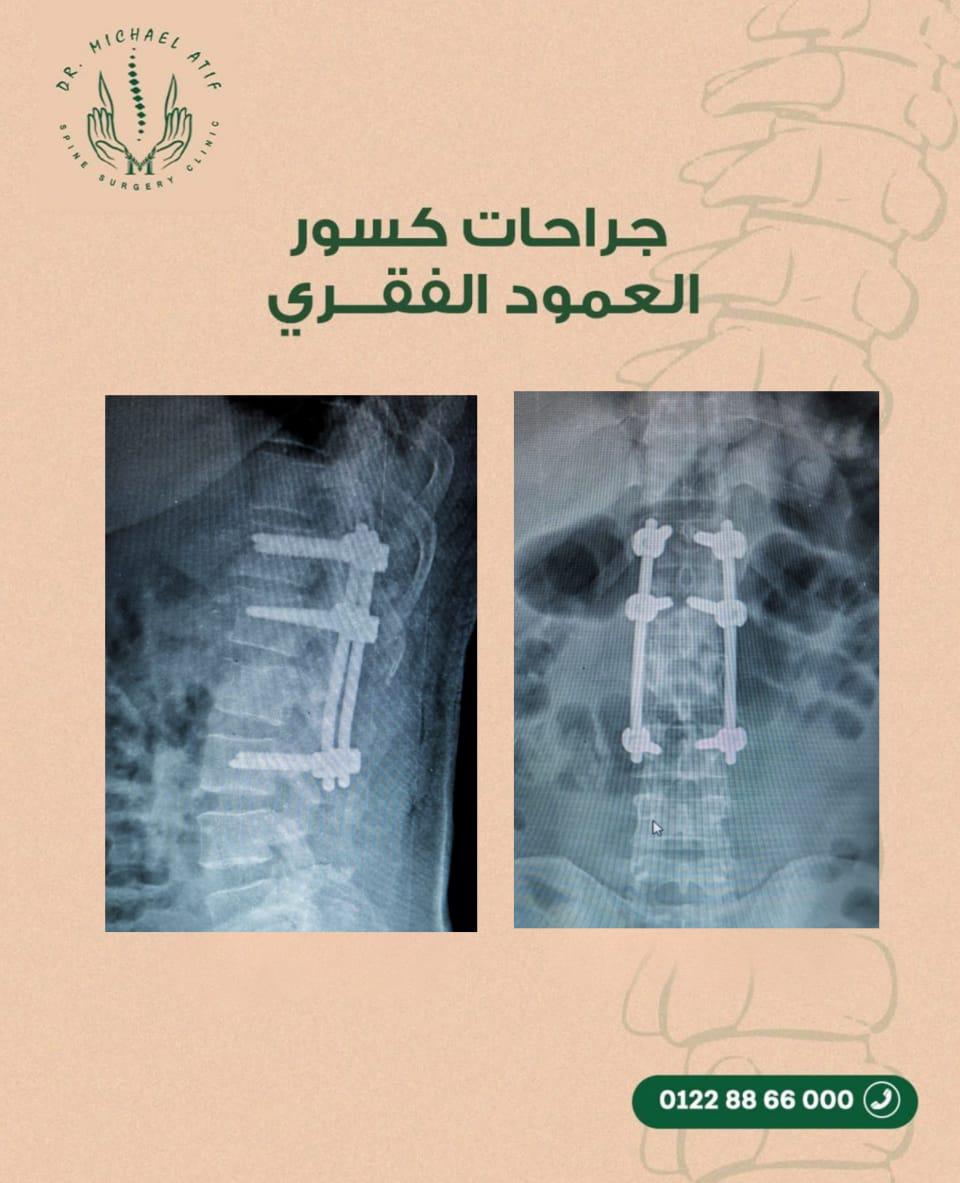
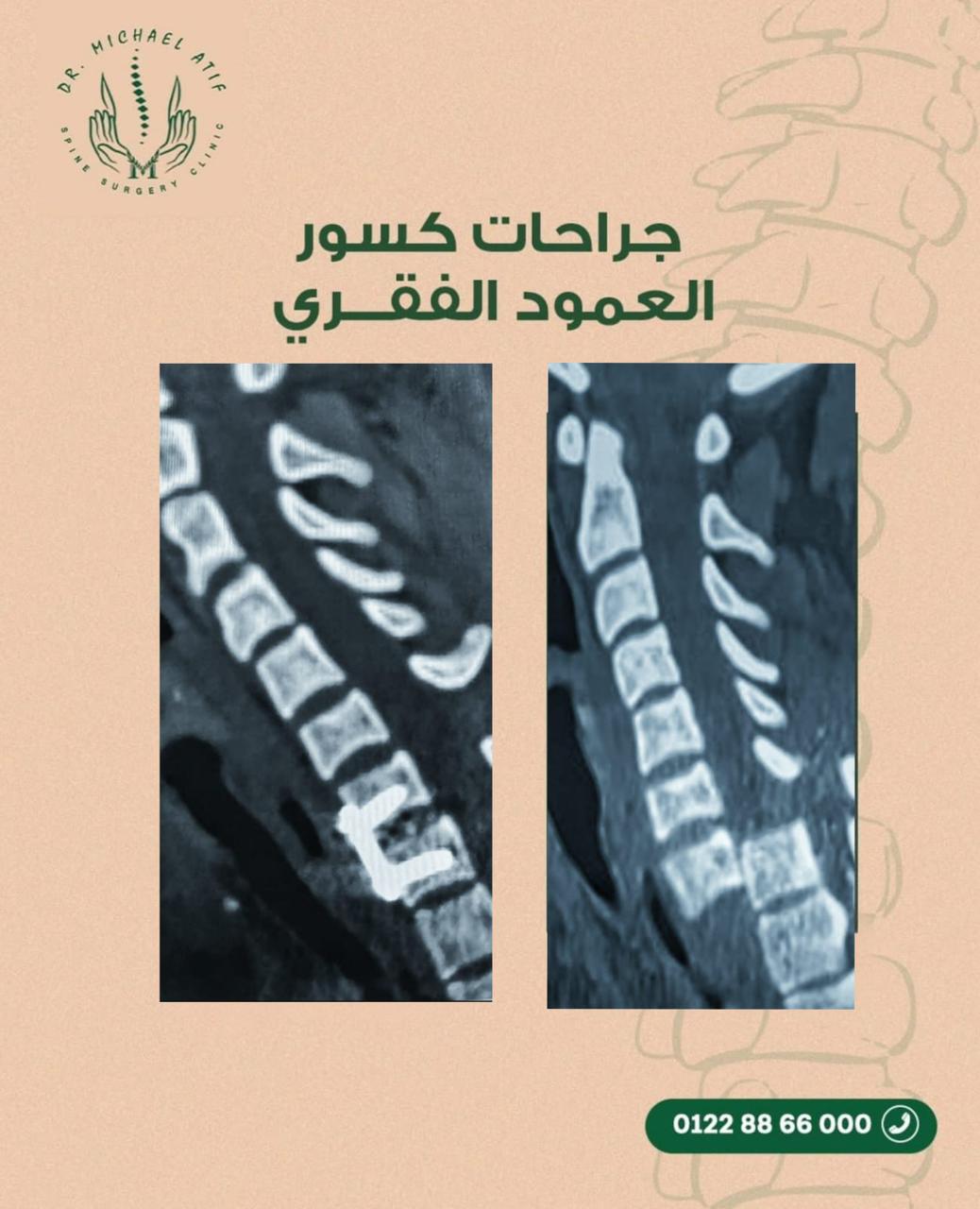
Spine Fracture Surgeries
Performed to stabilize vertebrae, protect the spinal cord and nerves, and correct any instability or deformity. The decision between conservative treatment and surgery depends on the fracture type, stability, and neurological status.
When is surgery needed?
- Neurological weakness or spinal cord compression symptoms.
- Spinal instability or potential for deformity.
- Severe fractures with loss of vertebral height or ligament injury.
- Failure of conservative treatment with persistent severe pain.
Main Surgery Types
1. Instrumentation & Fusion:
Using screws and rods (posterior or anterior) to stabilize unstable fractures.
2. Decompression:
Removing pressure from nerves or spinal cord by excising bone or disc fragments.
3. Cervical Fracture Surgery:
Anterior (plating + cage) or posterior fixation depending on the fracture pattern.
4. Vertebroplasty:
For elderly patients with painful osteoporotic fractures to provide rapid relief.
Spine fracture surgeries are highly safe and effective, often performed via minimally invasive techniques with small incisions to ensure a quick recovery.